

Kaiju No. 8 (Season 1): Living on the Brink

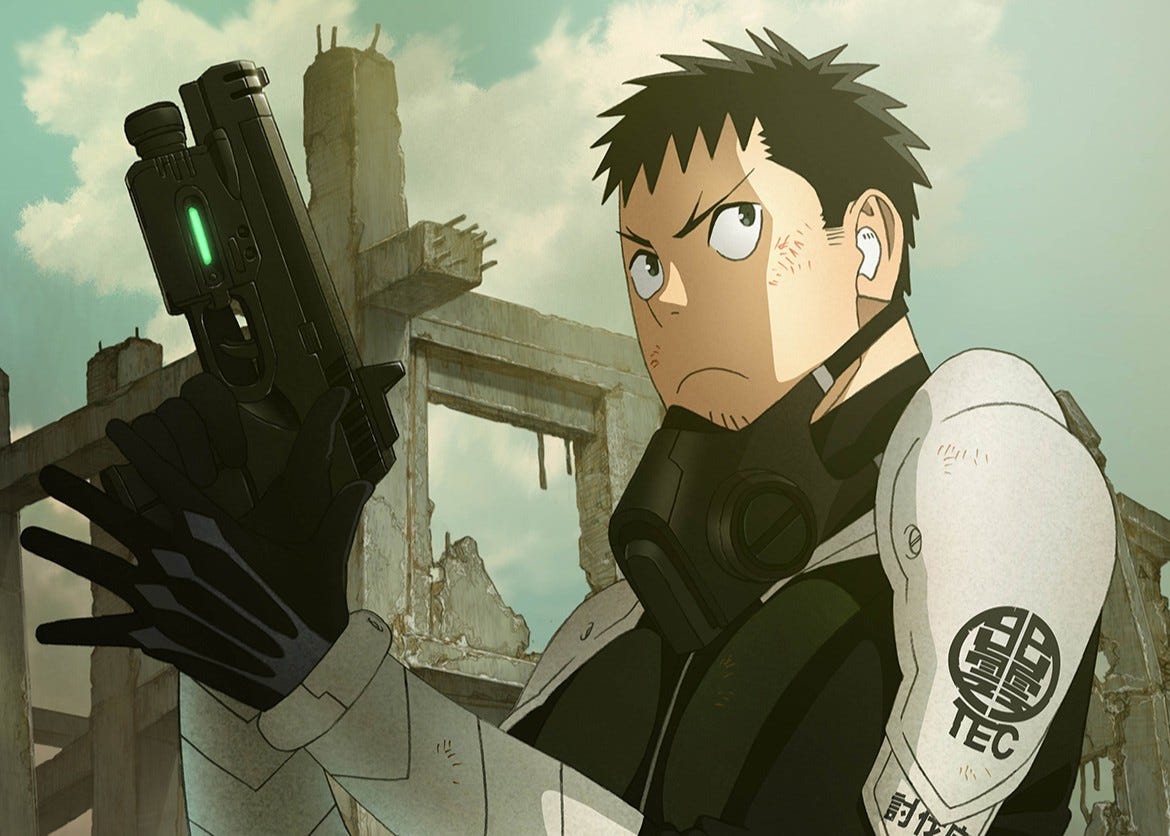
Kaiju No. 8 is taut with tension — not just the storytelling kind that keeps us glued, but the anxiety of living in permanent anticipation of the next large-scale disaster, of aging out of youth without a foothold in life.
Developed by Production I.G from a hit manga series, it’s set in a parallel universe where hordes of monsters (Kaiju) — gruesomely wet with pulsing sacs, multiplying madly like a lab experiment gone wrong — periodically erupt out of nowhere to lay waste to cities and livelihoods, echoing the earthquakes that are a fact of life in Japan.
The story follows a group of cadets in the elite Kaiju Defense Force — including the protagonist Kafka, a 32-year-old desperate to escape a dead-end job scrubbing city streets of Kaiju entrails — as they confront a series of increasingly belligerent Kaiju attacks, orchestrated by a villain with an uncanny ability to commandeer the bodies of unsuspecting victims.
The series visuals perfectly capture the lived-in feel of everyday places such as the sprawling shopping malls and commuter rail stations of suburban Tokyo. The visual realism makes the story immediately believable, and implicitly raises the stakes by making the terror local and visceral.
The series’ fast-paced choreography of narrative tension makes for can’t-look-away viewing. In the space of 25 minutes we might find Kafka unwittingly trapped in a Kaiju body, forced to fight off a colleague without spilling blood or giving away his identity, after which we see a swarm of Kaiju cutting silently across the night sky, destination unknown.
What gives the series its aura of raw vulnerability is Kafka’s search for a foothold in a world offering few certainties. A self-doubting millennial stranded among hotshot peers close to half his age, Kafka is constantly on the verge of flunking out. The next Kaiju attack is a ticking time bomb, a question of when. Through sheer perseverance and selfless devotion to his colleagues, he eventually manages to carve out a place for himself, keeping his hybrid Kaiju body a secret from the senior staff.
The series has its wryly knowing moments too, such as when it turns its eyes to the bureaucratic inertia of the Kaiju Defense Force brass (”But there’s no precedent!” is a familiar refrain). It’s a send-up of Japanese corporate culture that should be relatable for anyone who’s ever felt like a cog in a slow-moving machine.
The tension comes to a head when Kafka’s secret Kaiju identity becomes known, and he faces the risk of extermination under official rules. The eventual outcome may be inevitable, yet seeing Kafka’s colleagues — the entire Kaiju Defense Force, really — resolutely welcome him back into the fold feels like a not-so-small win for humanity.