

Sheep in the Box: Somewhere, If Not Here
Hirokazu Kore-eda examines how grief can become trapped in guilt, and how seemingly contradictory concepts — tech and traditional beliefs, life and death — may not be as irreconcilable as they sound

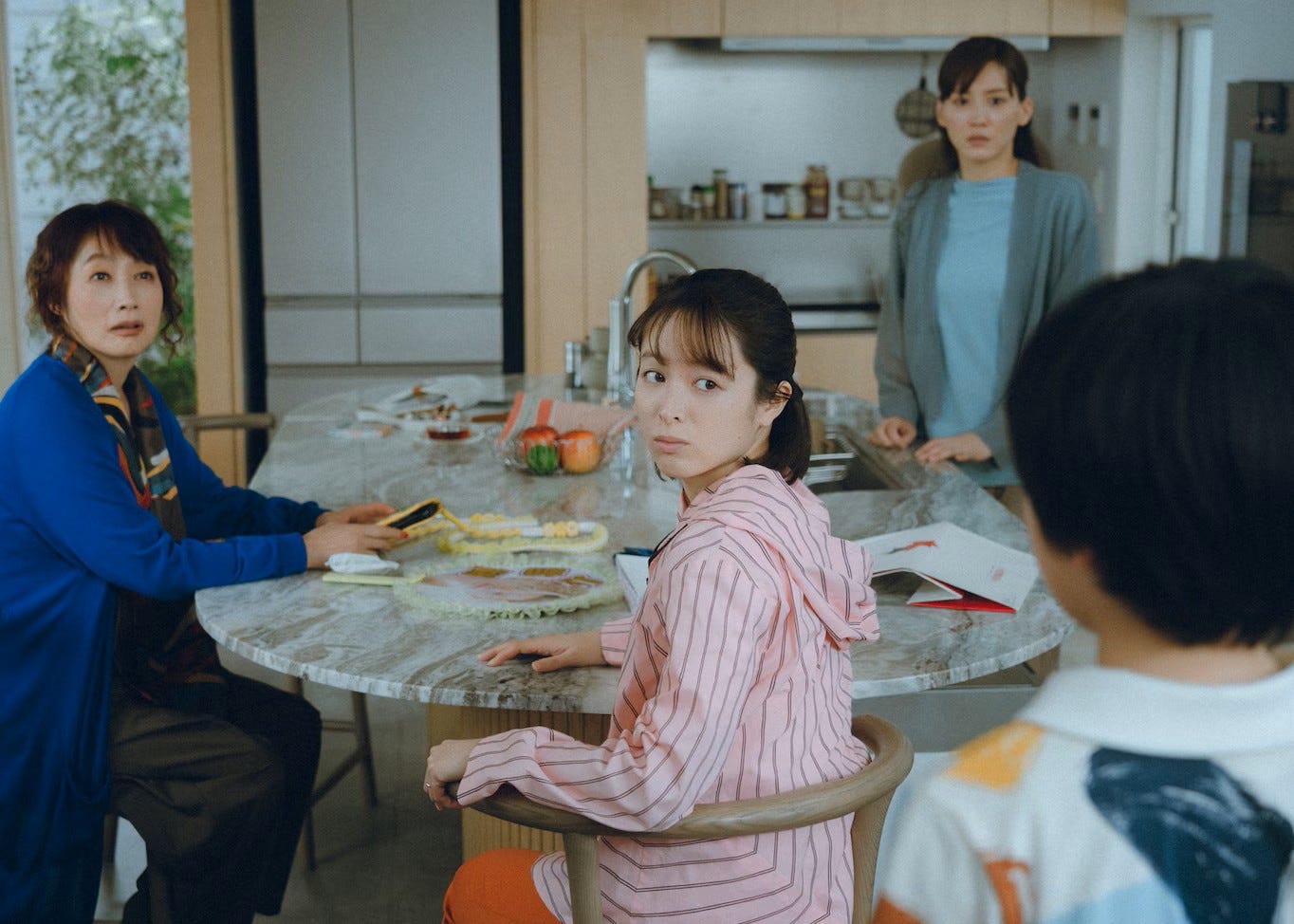
A stylish architect who designs villas for wealthy Tokyoites, Otone is less than thrilled to find her mother on her doorstep, radiating unbridled energy in her bright blue wrap. It’s not just that Otone finds the older woman draining — turning up unannounced, taking stock of the fridge as if it’s her own. There’s the matter of the boy, or rather the humanoid that Otone’s recently acquired, a perfect incarnation of the child she lost two years ago.
If only. If only she’d been able to pick him up that particular day. If only she hadn’t wished to be free of motherhood in fleeting moments of frustration. Directed by Hirokazu Kore-eda, Sheep in the Box shows us how Otone’s grief is inseparable from her guilt. Cocooned within her regret is a yearning to believe that she can distance herself from further tragedy through vigilance and effort. The return of her son — or so it feels at first — provides a much-needed respite from this exhausting mantle of responsibility.
Otone’s straight-shooting mother — voice like gravel, cigarette in hand — would beg to differ. Death is just one of the many things in life beyond our control. Why not focus on enjoying life, rather than clinging to the past? The dead are never entirely gone, “there” if not “here”, coming home every summer during the Obon holidays, when spirits are supposed to visit their families. As far as she’s concerned, caring for a robot in place of a real child is a sign of a pitiful inability to face reality.
Needless to say, the sentiment does not go over well with Otone. But it’s the fiery tension of this mother-daughter exchange that illuminates the crux of the story, the difficulty of squaring our modern faith in self-agency with a loss as unreasonable and irreversible as the death of a child. The implied arc of Otone’s life — from a childhood in the countryside to a chicly minimalist life in Kamakura — suggests a habit of applying oneself, a faith that diligence and effort naturally lead to desired outcomes. But there isn’t any redemptive path forward after a tragedy like the loss of a child.
Trains provide a sense of movement, gliding across the screen, captured in motion by a child’s hand. On one hand they’re an embodiment of our innate desire for stability and predictability: Otone’s son loved to recite the cadence of local train stations in order, a memory seamlessly transferred onto the humanoid. They’re also a reminder of the dedication and smooth efficiency required in return — not unlike the trains moving on schedule from Point A to Point B, come rain or shine.
The train tracks are hedged by a forest, mirroring the timber beams that Otone’s husband, a master carpenter, works with, and the massive chestnut trees that grow deep in the mountains near Otone’s home village. Like the builders who gather to bid on lots of lumber — the auctioneer’s call unchanged from times past — trees symbolize continuity across generations, echoing Otone’s mother’s belief that the dead are never entirely gone.
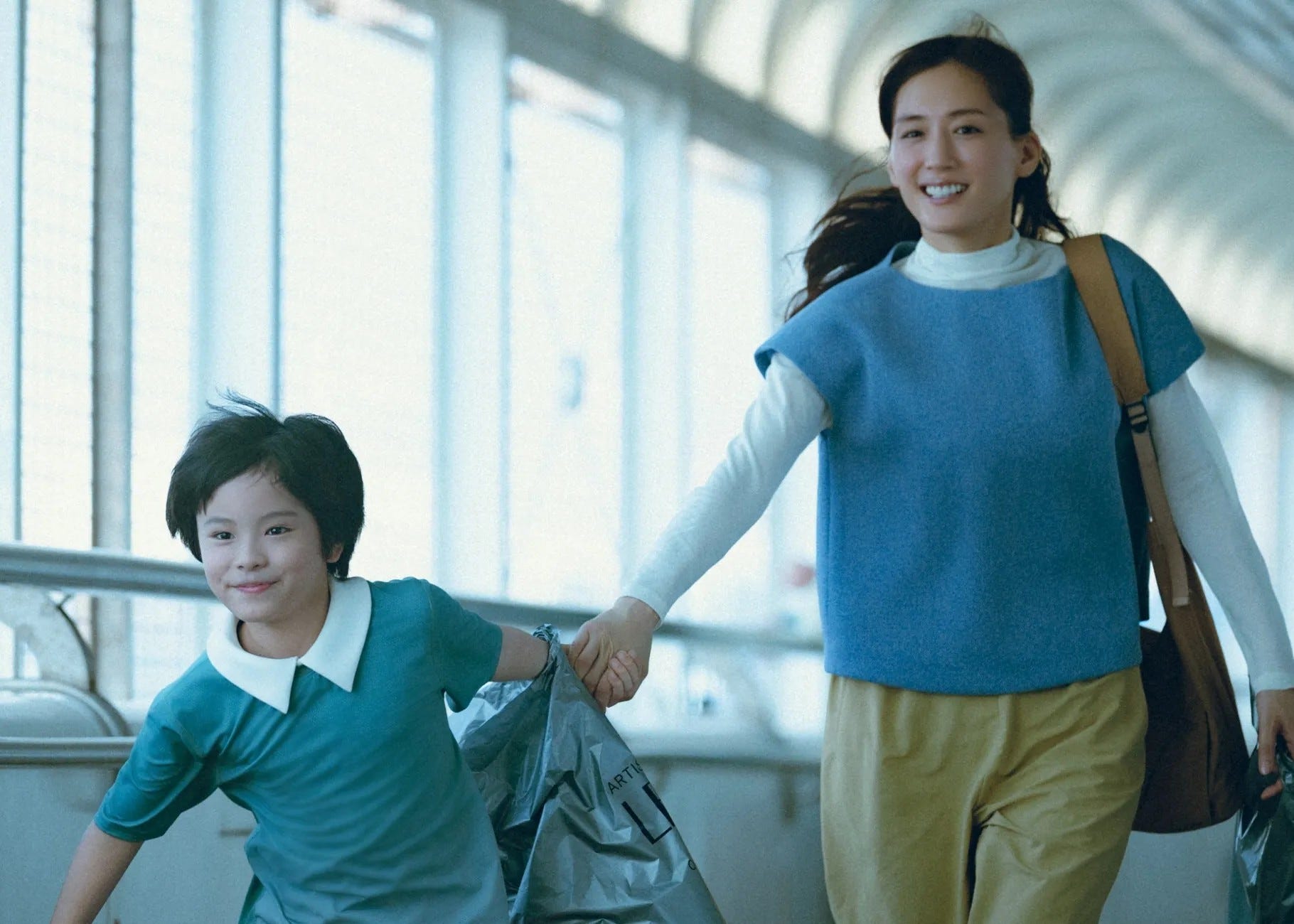
Otone’s humanoid is also uncannily adept at sensing the invisible. Out shopping, he offers up a helpful statistic. Fully two-thirds of mothers admit to having announced they’re quitting motherhood in a fit of frustration, he says. Don’t blame yourself, he seems to be telling her. We don’t have as much control over our lives as we might think. His message echoes his grandmother’s, but to Otone the boy’s words sound like redemption.
Back at home, piecing together a prototype of a home she’s designing, Otone explains to the boy how glass and wood together can fill interior spaces with light, but are so difficult to combine. That may be the best encapsulation of how rationality can co-exist with an acceptance of the unfathomable — that these two belief systems may not always fit perfectly together, but each offers a way of looking beyond the past and into the future.